


Most people put off making a will because it feels morbid or overwhelming. However, understanding the importance of wills can make the process less daunting. Creating a will is actually one of the most practical things you can do for the people you care about. And contrary to what you might think, it doesn’t require a fortune or even a lawyer in many cases.
Whether you own a house or just have a few bank accounts, whether you’re 30 or 60, you need a will. This guide walks through why that’s true, what actually goes into making one, and how to do it without spending thousands of dollars.
Why you need a will (even if you’re not wealthy)
There’s a persistent myth that wills are only for rich people with estates to worry about. That’s just not true. A will is simply a legal document that says who gets your stuff when you die. Your stuff might be a house and investment portfolio, or it might be a car, some savings, and your grandmother’s jewelry. Either way, someone needs to know what you wanted.
Without a will, state law decides everything. Your assets get divided according to intestacy laws, which follow a rigid formula that probably doesn’t match your actual relationships or wishes. Your spouse might have to share your estate with distant relatives. A friend you consider family won’t inherit anything. Your partner—if you’re not married—gets nothing at all.
And if you have kids? Not having a will means a court decides who raises them if something happens to you.
Here’s what typically happens without a will:
State law determines who gets what, often in ways that don’t make sense for your family. Relatives you barely know might end up with your possessions instead of the people you actually wanted to have them. Court proceedings drag on for months while your family deals with bureaucracy during an already difficult time. Minor children could end up with guardians you would never have chosen.
The point isn’t how much you own. It’s making sure what you do have goes to the right people, and that your kids are taken care of by someone you trust.
Why people avoid making a will (and why that’s a mistake)
Nobody wants to think about dying. Creating a will means confronting mortality, imagining your family without you, and making decisions about scenarios you’d rather never happen. Some people worry about seeming to play favorites among their kids or causing family drama. Others feel anxious about all the what-ifs—what if they forget something important, what if they make the wrong choice for guardians, what if circumstances change.
These feelings are completely normal. But avoiding the task doesn’t make those feelings go away. It just postpones them while potentially creating a bigger mess for your family later.The better way to think about it: making a will isn’t about death. It’s about taking care of people.
When you create a will, you’re preventing arguments between grieving family members. You’re saving them from confusion about what you would have wanted.
Common myths that keep people from making a will
Before getting into the practical steps, it’s worth clearing up some misconceptions that stop people from moving forward.
- “Only wealthy people need wills”
This one’s pervasive but wrong. If you have anything you care about—whether that’s property, savings, family heirlooms, or just preferences about who gets your things—you need a will. The goal isn’t protecting a fortune. It’s making sure your wishes get followed and your family doesn’t have to guess what you wanted. - “Making a will costs too much”
Attorney fees can run high, but they’re not your only option. Online services charge anywhere from $20 to $200 for a valid will. Some community organizations offer free assistance. You have affordable choices. - “You need a lawyer for a will to be legal”
Not true. While complex estates benefit from legal help, most people can create binding wills using templates or online tools. As long as your will meets your state’s requirements—proper signatures, witnesses, format—it’s legally valid regardless of who drafted it. - “I’m too young to worry about this”
Age isn’t the determining factor. Life circumstances are. If you’re married, have kids, own property, or have strong preferences about your belongings, you should have a will. Unexpected things happen at any age. Better to have it sorted.
Will vs trust: what’s the actual difference?
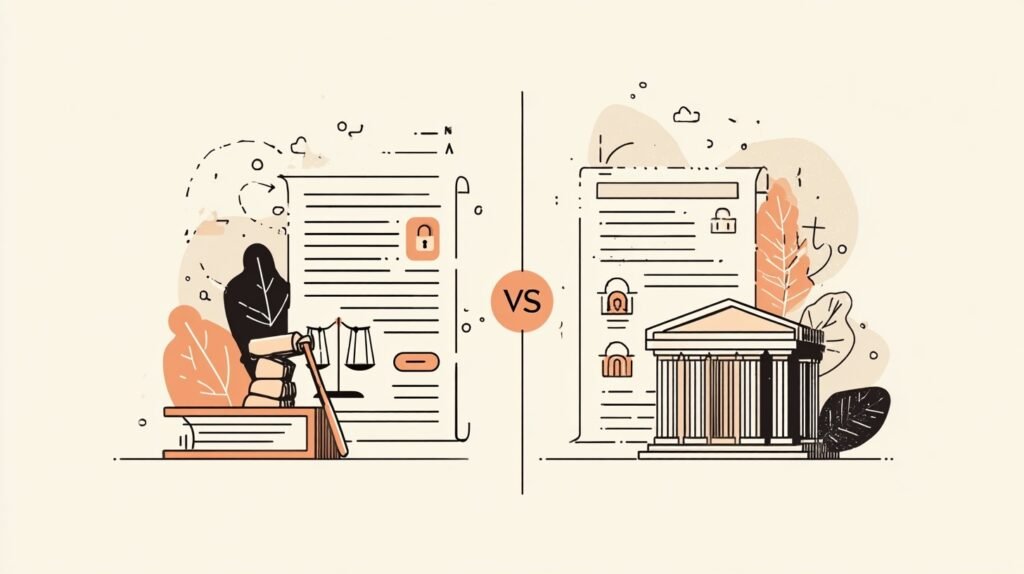
When you start researching estate planning, you’ll quickly run into both wills and trusts. They’re related but work differently, and which one you need depends on your situation.
Wills
A will kicks in after you die. It specifies who gets your assets and, if you have minor kids, who should raise them. The downside is that wills go through probate—a court process that validates the document and oversees distribution. Probate takes time (often months) and becomes part of public record.
Trusts
A trust is a legal entity that holds your assets on behalf of beneficiaries. Unlike a will, a trust starts working immediately when you create it and continues after your death. Because trusts avoid probate entirely, asset distribution happens faster and stays private. You can also set specific conditions—like releasing inheritance at certain ages or milestones.
So which one do you actually need?
Most people with straightforward situations do fine with just a will. It’s simpler and cheaper. Go this route if your assets are relatively simple, you have clear beneficiaries, and probate doesn’t concern you.
Consider a trust if you’ve got substantial assets, a complicated family situation, property in multiple states, or if privacy matters to you. Trusts also make sense when you want detailed control over how and when beneficiaries receive their inheritance.
Some people use both—a will as a safety net and a trust for specific assets. If your situation feels complicated, talking to an estate planning attorney is worth it.
How to create a will affordably
You don’t need to drop a few thousand dollars to get a valid will. Here are the realistic options for 2025.
Online will services
Companies like Trust & Will, LegalZoom, and Nolo let you create a will for around $99 to $200. They walk you through each step with prompts and questions, make sure you’re meeting your state’s legal requirements, and often throw in unlimited updates. If your estate is straightforward—no business ownership, no complicated family dynamics, no major debt issues—these work well.
| Feature | Trust & Will | LegalZoom | Nolo |
| Basic Will price | $159 (individual) $259 (couples) | $99+ (varies by state) | $109.99 one-time |
| What’s included | Will, healthcare directives, power of attorney | Will only (add-ons available) | Will, healthcare directive, financial POA |
| Unlimited updates | ✅ Yes (first year free, then $19/year) | ❌ No ($89 per update) | ✅ Yes (lifetime) |
| State-specific | ✅ All 50 states | ✅ All 50 states | ✅ All 50 states |
| Mobile App | ✅ Yes | ❌ No | ❌ No |
| Document storage | ✅ Cloud storage included | ✅ Available ($39.99/year) | ❌ No |
| Expert review | Available ($99 add-on) | ✅ Included | ❌ Not available |
| Notary Service | ✅ Remote notary available | ✅ Available (additional fee) | ❌ Not included |
| Time to complete | 15-20 minutes | 20-30 minutes | 15-25 minutes |
| Customer support | Email, chat | Phone, email, chat | Email only |
| Trust services | ✅ Yes (separate pricing) | ✅ Yes (separate pricing) | ✅ Yes (separate product) |
| Money-Back Guarantee | 60 days | 60 days | 60 days |
| Best for | Tech-savvy users wanting ongoing updates | Those wanting expert review option | Budget-conscious one-time users |
Templates you can fill out yourself
You can find free or cheap will templates from legal websites. Download one, fill in your details, and you’ve got a basic will. The catch is making sure the template actually complies with your state’s laws. You’ll also need to handle the witness and signature requirements yourself. Still, for a simple situation, it gets the job done. You can find more information in our Estate planning section of the website.
Community legal resources
Check with local nonprofits, senior centers, or legal aid societies. Many run free will-writing workshops or offer assistance on a sliding fee scale based on income. Your local bar association can also point you toward affordable estate planning help in your area.
When paying for an attorney makes sense
Some situations really do need professional help. If you’ve got a blended family, own a business, have substantial assets or debts, want to minimize estate taxes, or anticipate family fights over your estate, spending $300 to $1,000 on an attorney consultation is money well spent. Even just a one-hour review of a DIY will can catch problems you didn’t see coming.
What needs to be in your will
For a will to hold up legally, certain things have to be in there. State requirements vary slightly, but these are the basics that apply almost everywhere.
Start with your full legal name, date of birth, and address so there’s no confusion about whose will this is. Then include a clear statement that this is your last will and testament and that it replaces any previous wills you’ve made.
Who’s in charge: your executor
You need to name an executor—the person who’ll handle your estate, pay off any debts, and distribute assets according to your instructions. Pick someone organized and trustworthy who’s willing to take this on. It’s not a fun job. Also name a backup executor in case your first choice can’t do it.
Who gets what: beneficiaries and assets
Be specific about who inherits what. If you want your sister to have your house and your best friend to get your car, say that. If you’re leaving everything to one person, state it clearly. Think about what happens if a beneficiary dies before you do—name alternates to avoid complications.
Guardians for your kids
If you have children under 18, this might be the most important part of your will. Name the person (or people) you want raising your kids if you can’t. Pick someone who shares your values and actually has the capacity to take on kids long-term. Talk to them first before putting their name in your will—guardianship is a massive responsibility.
Getting the signatures right
This is where a lot of people mess up. Your state has specific rules about how wills must be signed and witnessed. Most states require you to sign in front of at least two witnesses, who then also sign the document. Those witnesses should be adults who aren’t beneficiaries in your will—otherwise you create conflicts of interest.
Some states recognize self-proving affidavits, which is basically a notarized statement from you and your witnesses that makes probate simpler later. Not required, but helpful.
If you don’t follow your state’s execution requirements exactly, your will might not be valid. That’s why templates and online services help—they’re designed around state-specific rules.
Common questions about wills
How do I change my will later?
Life changes, and your will should change with it. When you get married or divorced, have kids, go through major financial shifts, or just change your mind about beneficiaries, you need to update your will.
You can add a codicil (basically an amendment) for small changes, or just write a completely new will that explicitly cancels the old one. Most lawyers recommend the new will approach—it’s cleaner and less confusing.
Can I just tell people my wishes verbally?
In almost all states, no. Oral wills aren’t legally recognized. A valid will needs to be written down, signed, and witnessed properly. A handful of states allow oral wills in very specific situations—like if you’re literally on your deathbed or serving in the military during wartime—but you can’t rely on that.
Put it in writing if you want it to count.
Do I need a lawyer to notarize my will?
Notarization isn’t actually required for wills in most places, though it can help. A notarized self-proving affidavit (signed by you and your witnesses in front of a notary) makes probate easier because witnesses don’t have to show up in court to validate it later.
You don’t need a lawyer for notarization. Just bring the document, your witnesses, and find a notary public. Banks, libraries, and UPS stores often have notaries available.
What does making a will actually cost?
It varies a lot. Online DIY services run $20 to $200. If you hire a lawyer, expect $300 to $1,000 for a straightforward estate, more if things get complicated. Free options exist through community legal aid if you qualify.
Whatever the cost, it’s minimal compared to what your family might spend in legal fees and headaches without one.
Why you need to update your will regularly
Creating your will isn’t the finish line—it’s the starting point. Your life evolves, and your will should evolve with it.
Review and update your will whenever major life events occur, such as marriage or divorce, births or adoptions, deaths of beneficiaries or executors, significant asset changes, moving to a new state, or changes in your relationship with named individuals.
Even without major changes, review your will every three to five years to ensure it still reflects your wishes.
Failing to update your will can lead to unintended consequences. An ex-spouse might inherit assets if your divorce decree didn’t specifically address your will. Children from a new marriage might be accidentally excluded. Outdated guardianship designations could place your children with people you no longer trust.
Set a calendar reminder to review your will annually. Life changes quickly, and keeping your will current protects your family from complications and confusion.
Take Action Today: Secure Your Family’s Future
Creating a will is one of the most loving, responsible actions you can take for your family. It doesn’t have to be expensive, complicated, or emotionally overwhelming.
Start by choosing the method that fits your budget and situation—whether that’s an online service, a DIY template, or professional legal help. Gather the essential information: your assets, chosen beneficiaries, preferred executor, and guardians for minor children if applicable. Then follow through with proper execution, ensuring your will meets your state’s legal requirements.
Don’t wait for the “perfect time” to create your will. That time doesn’t exist. The best time to protect your family is right now.
Your legacy matters. Your family’s peace of mind matters. Take the first step today, and give yourself the peace of knowing your wishes will be honored and your loved ones will be cared for exactly as you intend.
